Why Your Skin Ages Differently After 45
Get your FREE Guide to Healthy Agingsent to your inbox!
Sign up for Email alerts
And Why IPL and Lasers Are Not the Same Thing
Many women notice a point where their skin suddenly starts behaving differently.
The brightness fades.
Texture changes.
Redness becomes harder to calm.
Fine lines seem to appear faster.
And treatments that once gave great results do not seem to last as long.
Most people assume this is simply “getting older.”
But aging skin is actually changing at multiple levels at the same time.
Years of sun exposure begin showing up as pigment and uneven tone. Collagen production slows down. Skin repair becomes less efficient. Inflammation increases. Hormonal changes affect hydration, healing, and skin thickness. Even stress and poor sleep can show up directly on your face.
That is why one treatment is rarely the answer to everything.
Different technologies target different layers of aging, and understanding that difference is what helps you make smarter decisions for your skin instead of simply chasing trends.
The Real Reason Light-Based Treatments Work
Both IPL and laser resurfacing use light energy to create controlled changes in the skin, but they are designed to address very different concerns.
Think of it this way:
Some treatments focus on improving the appearance of the skin.
Others focus on improving the behavior and quality of the skin itself.
That distinction matters more as we age.
When collagen slows down and inflammation increases, your skin does not repair itself the same way it did in your 30s. That is why treatment selection becomes more important over time.
The best treatment is not always the strongest treatment. It is the treatment that matches what your skin is actually struggling with.
What IPL Is Best For

IPL (Intense Pulsed Light) is often one of the best starting points when skin begins looking uneven, dull, or weathered.
Many women describe it as:
“My skin just doesn’t look as clear or bright as it used to.”
That is exactly where IPL tends to shine.
IPL primarily targets:
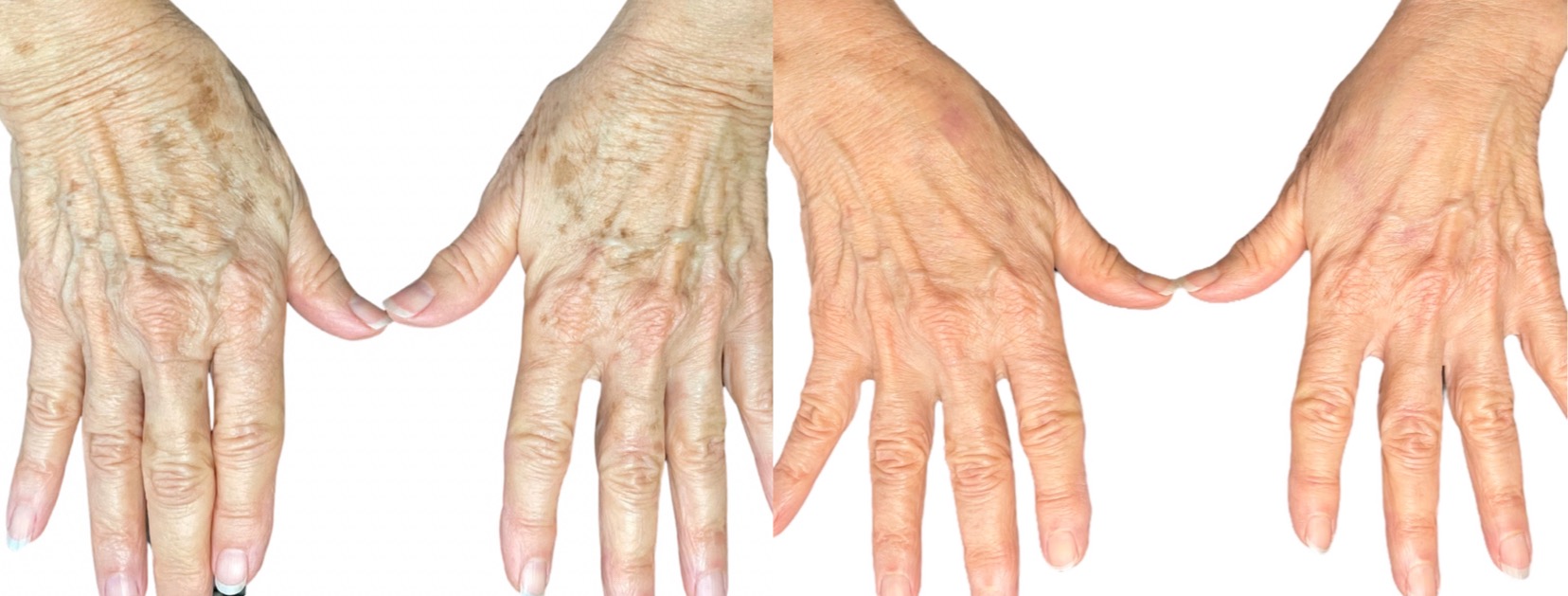
Sun damage and brown spots
Redness and flushing
Broken capillaries
Uneven skin tone
Overall dullness
It works by delivering broad-spectrum light into the skin, where pigment and redness absorb the energy. Your body then gradually clears away that damaged pigment over time.
The result is skin that looks:
Clearer
Brighter
Calmer and more even

One reason IPL remains so popular is that downtime is usually minimal. Most people experience temporary redness or darkening of pigment for a few days, but normal activities can typically continue right away.
For many women over 45, IPL can create a fresher, healthier appearance without looking overdone or aggressive.
Where Laser Resurfacing Comes In

Laser resurfacing works differently because it focuses less on color and more on the deeper structure of the skin.
This is where we begin addressing:
Fine lines
Crepey texture
Rough skin
Enlarged pores
Acne scarring
Early skin laxity
Collagen decline
Instead of mainly targeting pigment, laser resurfacing stimulates skin renewal and collagen remodeling.
As collagen production slows with age, skin becomes thinner, less resilient, and slower to repair. Laser treatments help signal the skin to begin rebuilding again.
That is why many people notice:
smoother texture
firmer-looking skin
refined pores
healthier skin quality over time
Some lasers work more gently below the surface with little downtime, while others remove very precise layers of damaged skin to create stronger regeneration.
The deeper the treatment, the more recovery is usually involved.

And this is important:
More aggressive is not always better.
Especially after 45, skin health, barrier function, inflammation levels, and healing capacity all matter when deciding how aggressive a treatment should be.
Why Aging Skin Needs a Different Strategy
One of the biggest misconceptions in aesthetics is that stronger treatments automatically create better results.
They do not.
As we age, the skin’s ability to repair itself changes significantly.
Factors like:
chronic inflammation
stress
poor sleep
nutrient depletion
menopause
gut health
declining cellular energy
These all influence how your skin heals and responds to treatments.
That is why two people can receive the exact same procedure and have very different outcomes.
One heals beautifully.
The other stays inflamed, dry, reactive, or disappointed with the longevity of results.
This is one reason we take a more comprehensive approach to rejuvenation.
Because great skin needs more than surface treatments.
So Which Treatment Is Better?
The answer depends on what your skin actually needs.
If your biggest concerns are:
Pigmentation
Redness
sun damage
or uneven tone
IPL is often an excellent place to start.
If your concerns are more related to:
texture
fine lines
collagen loss
roughness
or skin quality
Laser resurfacing is usually more effective.
In many cases, the best results come from combining approaches over time.
Healthy skin is built in layers.
Sometimes we first calm pigment and inflammation. Then we focus on collagen stimulation and deeper rejuvenation. Sometimes internal support is equally important to improve healing and treatment response.
That is where personalized treatment planning becomes essential.
Why Consultation Matters More Than Ever
Online advice can make every treatment sound like the “best” treatment.
But skin rejuvenation should never be one-size-fits-all.
The right plan depends on:
your skin history
your level of inflammation
sun exposure
skin sensitivity
collagen health
lifestyle
recovery ability
and long-term goals
That is why proper assessment matters.
Not because you need more treatments, but because your skin deserves a strategy that actually makes sense for where it is now.

The Bigger Picture of Skin Rejuvenation
At CA Skin & Body Clinic, we believe the best aesthetic outcomes happen when we support both the surface of the skin and the health of the cells underneath it.
Treatments absolutely matter.
But so do:
inflammation levels
nutrition
collagen support
hydration
recovery
gut health
cellular energy
When those systems are struggling, the skin often shows it first.
That is why we approach aging differently.
Not as a quick fix.
Not as chasing trends.
But as supporting the skin in a smarter, more sustainable way.
Because great skin needs more than surface treatments.
Support Your Cells. Your Skin Will Follow.
There is no shortage of influencer supplements and “miracle” products online. We prefer professional-grade products from companies we trust because what you put in your body affects inflammation, collagen production, healing, and how your skin ages over time.
Explore our provider-selected favorites designed to support skin health from within:
Ready to Create a Smarter Plan for Your Skin?
If you are noticing changes in your skin and are unsure where to start, a personalized consultation can help you understand what your skin actually needs now—not what worked 10 years ago.
Whether your concerns are pigment, texture, collagen loss, inflammation, or overall skin aging, the right treatment plan should be designed around your skin, your goals, and your long-term skin health.
To schedule your consultation:
CA Skin & Body Clinic
📞 (575) 222-0900
You can shop for healthy snacks, skin care and nutritionals to boost your immune system at our Wellness Store
You can purchase Anna Approved supplements at Systemic Formulas
Here’s to better skin from within,
Anna Hooley, CNP, MSN
CA Skin & Body Clinic // Optimal Vitality Resource
References
Intense Pulsed Light (IPL) — American Society for Dermatologic Surgery, 2022.
Laser Skin Resurfacing — American Academy of Dermatology, 2023.
Laser resurfacing: Ablative and nonablative — Ross, E. V., & Uebelhoer, N., Clinics in Dermatology, 2012.
Current trends in intense pulsed light — Goldberg, D. J., Journal of Clinical and Aesthetic Dermatology, 2013.
Nonablative laser and light-based rejuvenation — Tierney, E., Mahmoud, B. H., & Srivastava, D., Dermatologic Clinics, 2012.
Laser skin resurfacing: An update — Alster, T. S., & Tanzi, E. L., American Journal of Clinical Dermatology, 2007.