What Summer Left Behind: Why Fall Is the Best Time to Reset Your Skin
Get your FREE Guide to Healthy Aging sent to your inbox!
Sign up for Email alerts
What Summer Left Behind: Why Fall Is the Best Time to Reset Your Skin
As the temperatures begin to cool, many people notice something unexpected.
The tan they enjoyed all summer starts to fade, but suddenly brown spots seem darker, fine lines appear more noticeable, and the overall texture of their skin doesn't look quite as smooth as it did just a few weeks earlier.
One of the most common questions we hear every fall is:
"Why did my skin suddenly get worse?"
The answer is usually: it didn't happen suddenly.
Some of what you're seeing may have been there before summer and simply became more noticeable as your tan faded. But summer UV exposure can also stimulate pigment production and contribute additional cellular damage of its own. In other words, fall can reveal old damage while also showing us some of what the most recent summer left behind.
Your Skin Remembers Every Summer
Even if you've been diligent about sunscreen, your skin remembers cumulative ultraviolet (UV) exposure.
Repeated UV exposure affects far more than skin color. It can damage cellular DNA, increase oxidative stress and inflammatory signaling, and activate enzymes that break down components of the extracellular matrix, including collagen. Over time, these processes contribute to photoaging: changes such as mottled pigmentation, roughness, wrinkles, laxity, and loss of skin tone.
And that summer tan?
Although we tend to think of tanning as a healthy summer glow, biologically it tells a different story. A tan is part of the skin's protective response to UV exposure and UV-induced cellular damage. UV exposure stimulates melanocytes to increase pigment production as the skin attempts to provide greater protection against subsequent radiation.
So while a tan may fade, the exposure that produced it is not necessarily without consequence.
What summer leaves behind is also not limited to the sun exposure we experienced this year. UV damage accumulates over decades, gradually affecting the collagen and elastin-rich structures that give our skin its firmness, strength, and resilience.
At the same time, intrinsic aging is occurring. Cellular turnover and repair change with age, collagen production declines, barrier function can become less resilient, and the skin may recover differently from environmental stress than it did when we were younger.
Eventually, those accumulated changes become visible.
You may begin noticing:
Uneven pigmentation or dullness
Sunspots and areas of discoloration
Rough or uneven texture
Fine lines that are becoming deeper
Persistent redness or visible vessels
Loss of firmness, elasticity, or tone
Skin that simply doesn't seem to respond the way it once did
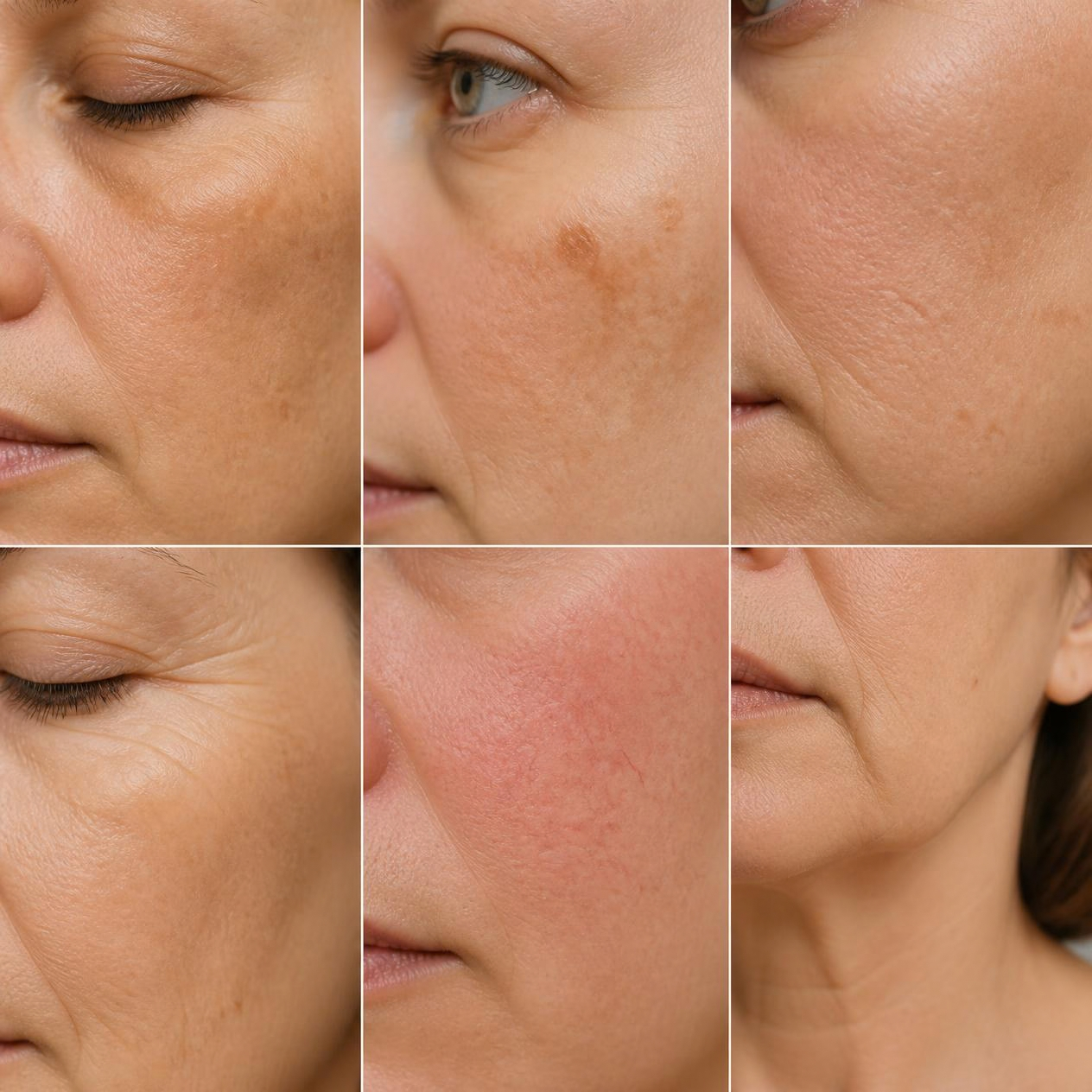
What you notice after summer, therefore, may represent far more than a single season. It may be the visible expression of years of accumulated exposure combined with the normal biological changes of aging.
That makes fall an especially useful time to stop, reassess, and look at the overall health and quality of your skin rather than chasing one new brown spot at a time.
Why Fall Is Considered Laser and Light-Treatment Season
Fall is often called "laser season," but more accurately, it is a particularly useful season for many laser, light, and resurfacing treatments.
As outdoor activities decrease and avoiding unnecessary sun exposure becomes easier, certain procedures become more practical to schedule. A summer tan can also affect which energy-based treatments are appropriate and when they can be performed safely.
This is why we don't simply choose a device based on the problem someone sees in the mirror.
Skin type, current pigmentation, recent sun exposure, skincare products, treatment history, the depth and type of pigmentation, vascular changes, texture, and the desired outcome all influence treatment selection.
For appropriate patients, IPL/Photofacial can be particularly useful for addressing certain pigmentary and vascular signs of photodamage. IPL is technically a broad-spectrum light treatment rather than a laser, and published research supports its use for several manifestations of photoaging, including lentigines, hyperpigmentation, erythema, telangiectasias, and aspects of skin texture.
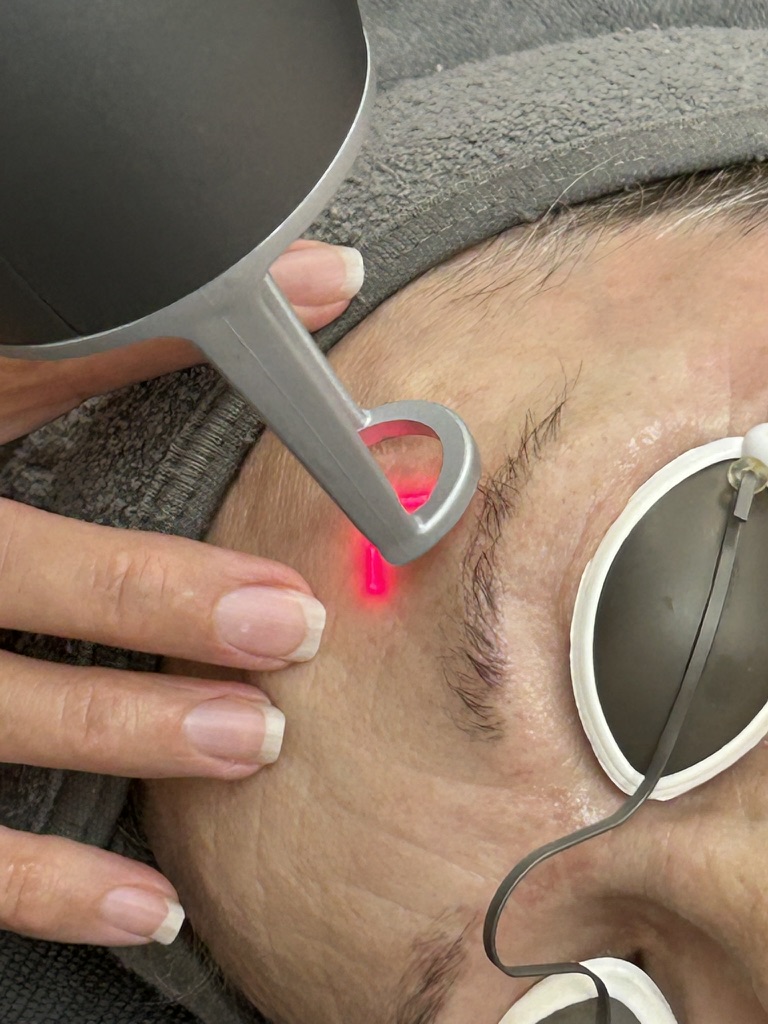
NOUVADerm provides another option when resurfacing and improvement in skin quality are part of the treatment goal.
But neither is automatically the "best" treatment simply because fall has arrived.
When the summer tan fades, we have an opportunity to thoughtfully evaluate what has changed, identify what we're actually treating, and develop a plan that supports healthy, natural-looking improvement through the holidays and into the coming year.
And planning matters.
Trying to repair years of accumulated change a week or two before an important event rarely produces the same result as giving the skin time to respond, repair, and remodel.
Healthy Skin Is More Than Treating Brown Spots
Pigmentation tends to get our attention after summer because we can see it.
But what we can see on the surface is only part of the story.
Healthy skin requires an intact and resilient barrier, adequate hydration, healthy circulation, functioning cellular repair systems, and a dermal matrix capable of maintaining and remodeling collagen and other structural proteins.
And those processes do not occur independently of the rest of you.
This is where our philosophy about skin differs from simply asking, "Which procedure treats this spot?"
Your skin is living tissue. When we perform a treatment designed to stimulate renewal or remodeling, we are asking that tissue to respond biologically.
Age, nutritional status, sleep, stress, metabolic health, inflammation, environmental exposure, skincare habits, and overall health can all influence the environment in which repair takes place. The evidence is stronger for some of these relationships than others, which is why we don't believe in blaming every wrinkle on your gut or prescribing a supplement simply because it is marketed for "anti-aging."
Instead, we look for the factors that are actually relevant to you.
This is also why our consultations often go beyond recommending a procedure. We consider your skin history, goals, previous treatments, lifestyle, current skincare, and—when appropriate—whether there are internal factors worth investigating or supporting.
Sometimes the next step is a laser.
Sometimes it is better skincare.
Sometimes it is collagen stimulation.
Sometimes it is addressing something we have been overlooking.
And quite often, the best plan uses several of those tools thoughtfully over time.
There Is No One-Size-Fits-All Treatment
One of the questions we hear most often is:
"Which treatment is the best?"
Or its close relative:
"Which one gives the best long-term result?"
The answer is frustratingly simple: it depends on your skin and what we are trying to change.
A brown spot, persistent redness, loss of elasticity, rough texture, deeper wrinkles, impaired barrier, and generalized loss of skin quality are not the same biological problem. It makes little sense to expect one device—or one skincare product—to treat all of them equally well.
Some patients benefit most from IPL or laser resurfacing. Others may need collagen stimulation with medical microneedling, carefully selected topical therapy, improved barrier support, or a combination of treatments performed in an intentional sequence.
Internal nutritional support may also be appropriate when an actual need has been identified, but supplements should not be used as a substitute for assessment. Evidence for many popular "skin supplements" remains mixed, and more is not automatically better.
Our goal isn't to recommend the newest treatment.
It isn't to recommend the most aggressive treatment.
And it isn't to put everyone on the same protocol.
Our goal is to determine what your skin needs now—and what will help it remain healthier over time.c
What Can You Do This Fall?
You don't have to begin with a procedure.
Fall is a good time to take inventory of what has changed and rebuild the habits that protect the investment you're making in your skin.
Look at your skin in good natural light. Pay attention to changes in pigmentation, redness, texture, dryness, and firmness rather than focusing only on wrinkles.
Continue daily sun protection. Cooler temperatures do not mean UV exposure has disappeared. Photoprotection remains one of the most important strategies for limiting additional photoaging.
Reassess your skincare. Products that worked well several years ago—or even throughout a humid summer—may no longer be the best match for your skin. Aging and seasonal environmental changes can both affect barrier function and hydration.
Don't overcorrect summer damage. More exfoliation, more acids, more retinoids, and more aggressive treatments are not necessarily better. An irritated or compromised skin barrier needs support, not punishment.
Think in months, not days. If you have an event coming up this winter or next spring, now is the time to plan. Many treatments depend on biological remodeling, which takes time.
Ask what you're actually trying to accomplish. "I want younger-looking skin" is a goal, but it isn't yet a treatment plan. Is pigmentation bothering you most? Texture? Laxity? Redness? Dryness? Volume changes? Understanding the problem helps us choose the appropriate tool.
Start Now, Enjoy the Benefits Later
One of the biggest misconceptions in aesthetics is that beautiful skin can be created overnight or with one treatment.
If only.
Many of our favorite treatments don't simply cover something up. They work by creating a controlled stimulus and relying on the skin's own repair and remodeling processes to produce change afterward.
That means improvement may continue developing for weeks—and, depending upon the treatment and biological process involved, sometimes months.
The real goal is not “reversing sun damage” or “reducing wrinkles.”
The goal is rejuvenated and regenerated skin that looks and behaves more youthfully.
And particularly after 40, that goal rarely comes from a "one-and-done" treatment or mentality.
Beginning your skin journey in the fall gives you something valuable: time.
Time to evaluate
Time to treat thoughtfully
Time for your skin to respond
And time to make adjustments rather than chasing a deadline
The Bottom Line
Every season brings different opportunities to care for your skin.
Autumn is less about trying to erase everything summer left behind and more about understanding what your skin is telling you now.
The brown spots, changing texture, dryness, redness, or loss of firmness you notice this fall may be signs of accumulated environmental exposure, intrinsic aging, or—most often—a combination of both.
You don't need to treat everything.
You do need to understand what you're treating.
Whether your concerns involve pigmentation, texture, collagen loss, dryness, or simply wondering why your skin has changed over the years, the best place to begin is with a thoughtful assessment and an individualized plan.
Healthy aging isn't about perfection.
It's about making informed decisions today that continue benefiting your skin for years to come.
We'd love to help you determine what those next steps look like for you.
Here's to better skin from within,
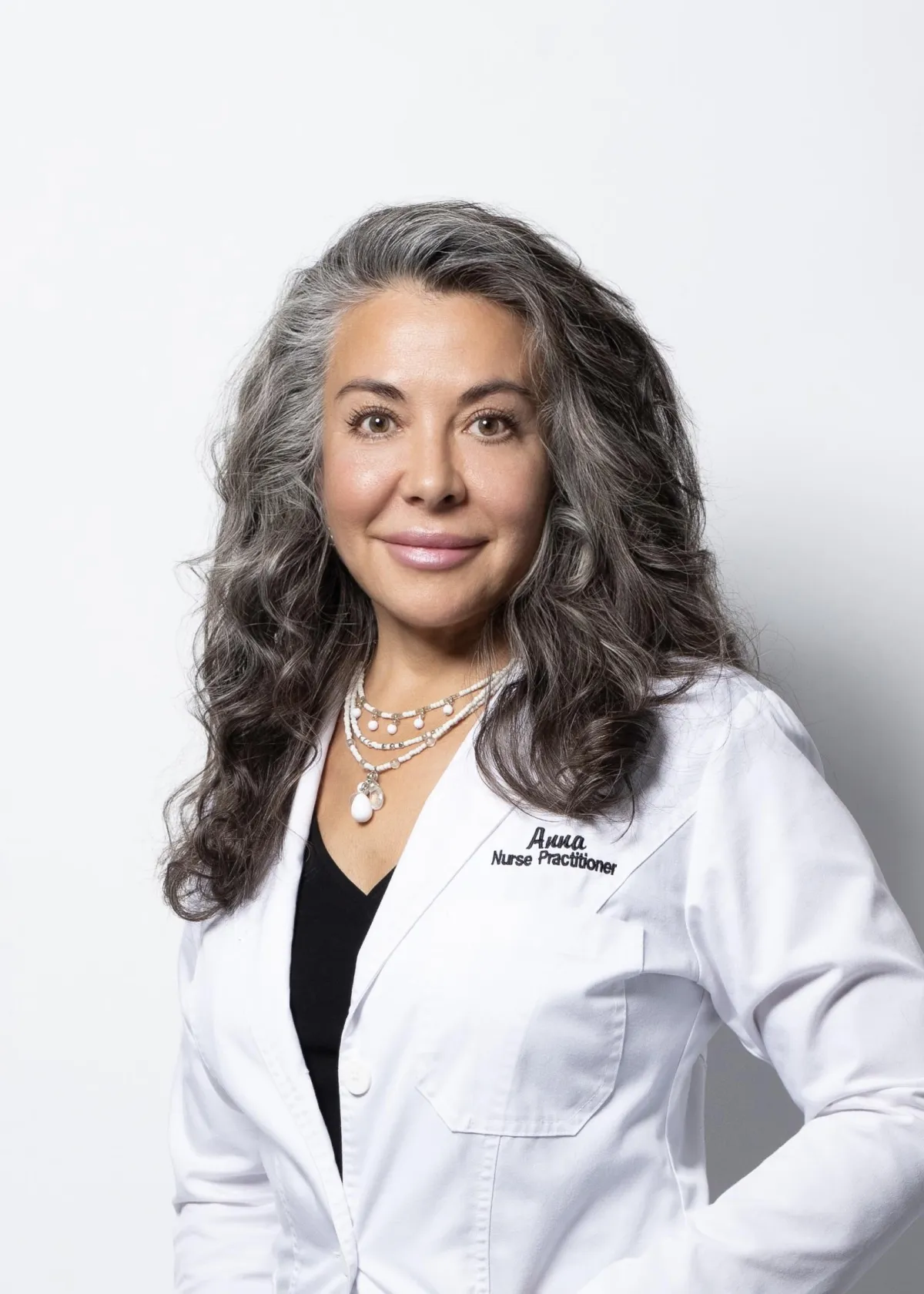
Anna Hooley, CNP, MSN
CA Skin & Body Clinic
Book your Consultation with our team today. 575-222-0900
You can shop for healthy snacks, skin care and nutritionals to boost your immune system at our Fullscript Store
You can purchase Anna Approved supplements at Systemic Formulas
Here’s to better skin from within,
Anna Hooley, CNP, MSN
CA Skin & Body Clinic // Optimal Vitality Resource
#caskinandbodyclinic #optimalvitalityresource
References
Tsai J, Kang S. Photoaging: Update on Pathogenesis, Prevention, and Treatment. Ann Dermatol. 2026;38(3):167-176. doi:10.5021/ad.26.006.
Fisher GJ, Wang ZQ, Datta SC, Varani J, Kang S, Voorhees JJ. Pathophysiology of premature skin aging induced by ultraviolet light. N Engl J Med. 1997;337(20):1419-1428. doi:10.1056/NEJM199711133372003.
Kang S, Fisher GJ, Voorhees JJ. Photoaging: pathogenesis, prevention, and treatment. Clin Geriatr Med. 2001;17(4):643-659. doi:10.1016/S0749-0690(05)70091-4.
Eller MS, Gilchrest BA. DNA photodamage stimulates melanogenesis and other photoprotective responses. J Investig Dermatol Symp Proc. 1999;4(1):35-40. PMID: 10537005.
Sales AFS, Pandolfo IL, Cruz MA, et al. Intense Pulsed Light on skin rejuvenation: a systematic review. Arch Dermatol Res. 2022;314(9):823-838. doi:10.1007/s00403-021-02283-2.
Rittié L, Fisher GJ. Natural and sun-induced aging of human skin. Cold Spring Harb Perspect Med. 2015;5(1). doi:10.1101/cshperspect.a015370.
Choi EH. Aging of the skin barrier. Clin Dermatol. 2019;37(4):336-345. doi:10.1016/j.clindermatol.2019.04.009.
Muzumdar S, Ferenczi K. Nutrition and youthful skin. Clin Dermatol. 2021;39(5):796-808. doi:10.1016/j.clindermatol.2021.05.007.